Same father, different fates: the Ambani brothers and the empire that broke in two
The will he never wrote
Dhirubhai Ambani died in July 2002 without a will. No instructions, no succession plan, no map through the $20-billion-plus empire he had spent four decades building from nothing. Just two sons — Mukesh, the elder, born 1957; Anil, the younger, born 1959 — and a silence where a document should have been. In the history of modern business, few absences have cost more.
The man who built India's biggest machine
To understand what was at stake, you need to understand what Dhirubhai Ambani actually built. Reliance Industries started in 1966 as a yarn trading company in Mumbai — one man, one product, an almost absurd ambition. By the time he died, it had become India's largest private corporation, touching petrochemicals, refining, textiles, and telecoms. He became famous for something specific: persuading millions of ordinary middle-class Indians to buy equity in his companies. He didn't just build a conglomerate. He built a national mythology around it.
His two sons had grown up inside that machine. Mukesh was methodical and operational — the detail man, the systems thinker. Anil was flashier, more aggressive, more comfortable in front of a crowd. From the outside, they looked complementary. Internally, the pressure was already building before their father's heart stopped.
Kokilaben and the great division of 2005
When Dhirubhai died intestate, it fell to Kokilaben Ambani — his widow, the family's matriarch, and by all accounts the only person either brother would actually listen to — to hold things together. For roughly two years she tried. It wasn't enough.
By 2004, Anil was telling interviewers that his role had been reduced to something "titular" — that Mukesh was making the major calls and leaving him with the window dressing. Then Mukesh gave a CNBC interview in which he mentioned "ownership issues" without elaborating. The press treated it like a grenade. Kokilaben stepped in.
In June 2005 she announced the solution: split the empire. Cleanly. Formally. Down the middle. Mukesh took the legacy assets — Reliance Industries itself, plus IPCL, the petrochemicals business their father had built first. Anil took what looked, at the time, like the future: Reliance Communications, Reliance Capital, Reliance Power, and Reliance Infrastructure. The whole package became known as ADAG — the Anil Dhirubhai Ambani Group. Each brother got his own kingdom. For a moment, India breathed.
The brief, dizzying peak
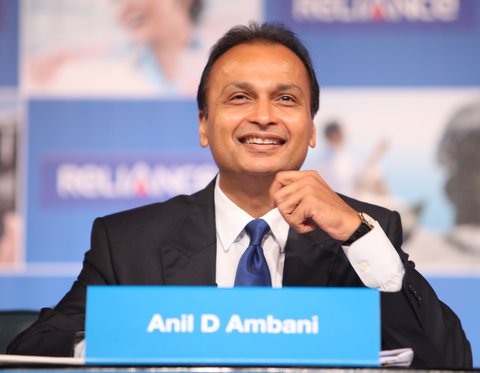
The peace held long enough to look like a success. By 2008, Anil had done something remarkable: he had surpassed his older brother in personal wealth. His net worth reached approximately $42 billion, and he climbed to become the world's sixth richest person. The younger brother, the one who'd complained about being sidelined, was briefly richer than the man who'd kept the flagship. The story seemed to be writing itself toward an unexpected ending.
It wasn't.
The gas dispute and the 32 newspaper ads
The mechanism that broke the peace was a gas supply agreement. When the empire was divided, one of the terms was that Mukesh's Reliance Industries would supply natural gas to Anil's Reliance Power at $2.3 per unit. A specific number. A binding commitment. Then the pricing unraveled — or at least that was how Anil told it. Mukesh's position was different. The brothers stopped talking through intermediaries and started talking through lawyers and op-eds.
Anil bought full-page advertisements in thirty-two newspapers accusing the government of siding with his brother. The Finance Minister of India intervened publicly, expressing concern about market destabilization. Two of the richest men in the country were staging their argument in the national press, and the country's finance chief was begging them to stop.
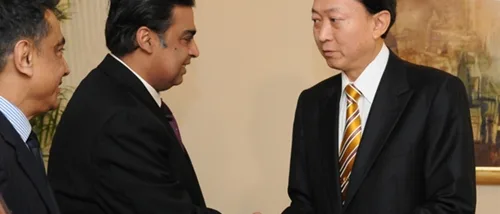
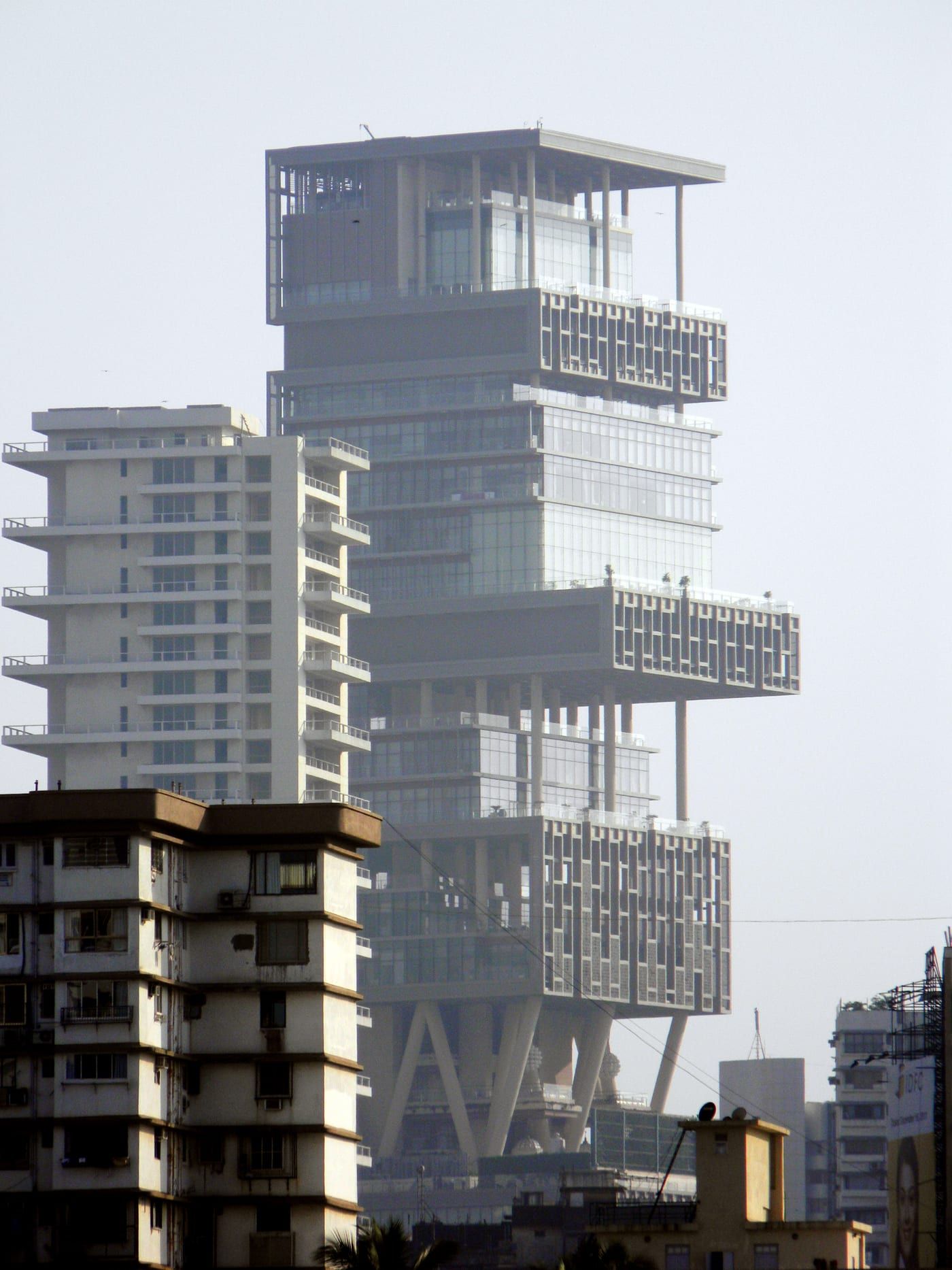
Kokilaben stepped in again. In 2010, she brokered a second truce. Anil withdrew the defamation suit he had filed against Mukesh. The brothers — who, in one of the more cinematic details in this entire story, had been living in the same Mumbai skyscraper the entire time, riding separate elevators — announced a détente. The war was officially over. Again.
The collapse
The détente didn't save Anil's business. Reliance Communications — the telecom arm he'd inherited in 2005 — buckled under debt it couldn't service. The competitive landscape in Indian telecoms became brutal, particularly after Mukesh launched Jio in 2016, a telecom disruptor that flooded India with cheap internet access and effectively remade the entire market. There is a certain irony in the fact that the vehicle Mukesh built accelerated the collapse of the industry Anil was desperately trying to survive in.
By 2019, things had reached their endpoint. A Mumbai court held Anil Ambani in criminal contempt for his company's failure to pay approximately $77 million owed to Ericsson. He was facing jail. The man who had been the world's sixth richest person eleven years earlier was staring at a prison cell over a debt his company couldn't clear.
Mukesh paid it. The elder brother, the one who had refused to honor the gas pricing agreement and had triggered a proxy war fought in thirty-two newspaper spreads, wrote the check that kept Anil out of jail. The $77 million was paid. Anil walked free.
Months later, in February 2020, Anil Ambani appeared before a UK court and declared bankruptcy. Insolvent.
What Mukesh built while Anil fell
The Jio play
While Anil's empire was accumulating debt, Mukesh was making one of the most audacious bets in modern business. Jio launched in September 2016 with free voice calls and nearly free data — pricing so aggressive it wiped out competitors and onboarded hundreds of millions of new internet users in a country where mobile data had been unaffordable for most people. It was not a product launch. It was a restructuring of the Indian economy.
Reliance Industries, powered by Jio and Mukesh's expansion into retail through Reliance Retail, became one of the world's most valuable companies. By 2024, Mukesh Ambani's net worth stood at approximately $117 billion. Asia's richest man. His father's empire, kept whole on one side of the 2005 split, had become something Dhirubhai himself might not have imagined.
What the Ambani split actually teaches
The failure mode here is specific. Dhirubhai Ambani was a man who persuaded millions of Indians to trust him with their savings — and then couldn't trust himself to write down what should happen when he was gone. A man who built governance structures for a public corporation never built the most basic one for his own family.
What followed was almost mechanically predictable. Two heirs with overlapping spheres and no defined boundaries. A mother acting as the only institutional check. Agreements made under pressure rather than principle. A gas pricing clause that became the pressure point because everything else was vague. Anil's businesses were not merely mismanaged — they were structurally disadvantaged from the moment the division was drawn, inheriting businesses that required capital intensity and favorable market conditions that never materialized at scale.
And through all of it, both brothers lived in the same building. That detail never loses its edge. The feud that shook Indian markets, that filled thirty-two newspapers with accusations, that dragged in the Finance Minister — and the two men at the center of it rode different elevators in the same tower every morning.
One of them is worth $117 billion. The other declared bankruptcy in a foreign court.
Same father. Same city. Same building. Completely different fates.
Related Stories
The princess, the secret children, and the $2 billion Wahaha battle
When China's most famous beverage billionaire died, his daughter thought the empire was hers. Then three strangers showed up with HSBC account numbers and a $2.1 billion claim.
The Safra Banking War: Son vs. Mother, Brothers, and a $25 Billion Empire
When Alberto Safra walked out of his family's bank to build a rival, his father was heartbroken — and his family was mobilizing. What followed was a multinational legal war over billions, a dying patriarch's disputed will, and a group chat nobody was allowed into.
The Redstone Wars: How Shari Outlasted Her Father and Sold the Empire He Built
Sumner Redstone spent decades trying to keep his daughter away from his media empire. She got it anyway — and then sold every last piece of it for $8 billion. Along the way: a son bought out for $250 million, a companion evicted from a mansion, a CBS CEO fired in disgrace, and Donald Trump walking off with $16 million on his way to the White House.