
The family that had the votes to say no — and said yes anyway
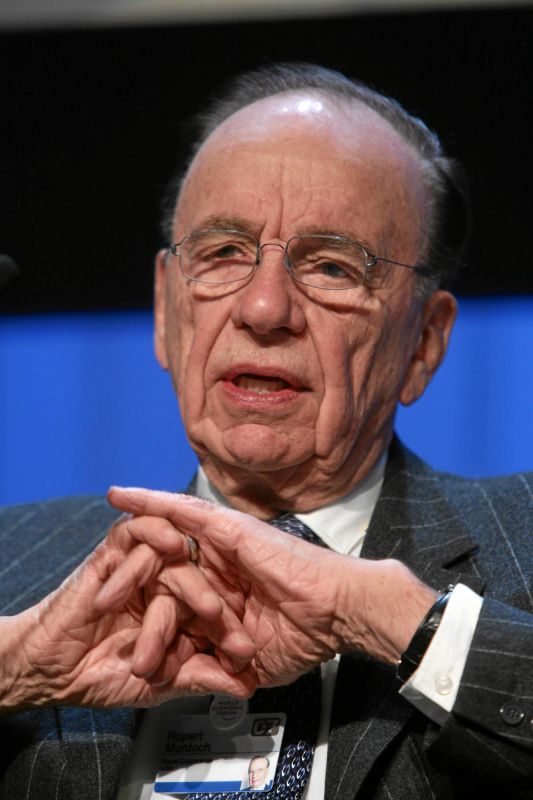
In the summer of 2007, Rupert Murdoch needed something he couldn't simply buy. He had the money. He had the lawyers. He had the audacity. But the Wall Street Journal — the most powerful financial newspaper in the world — was controlled by a single family, and that family had a voting structure specifically designed to keep people like him out. The Bancrofts could have said no. They had every mechanism to say no. They had elder stateswomen arguing no, hired bankers exploring alternatives, and a century of institutional identity that screamed no. And then, in August of that year, they said yes.
This is the story of how a media dynasty with all the power walked right into the one decision it could never undo.
How a dead man's company became a family heirloom
Clarence Barron bought Dow Jones & Company in 1902. He turned it into the home of the Wall Street Journal, Barron's, and eventually Dow Jones Newswires — a financial information empire that defined how America understood its own economy. When Barron died in 1928, the company didn't go to a business partner or a corporation. It passed to his stepdaughter's family. The Bancrofts.
For over a century, the Bancrofts held their grip on Dow Jones through a supervoting share structure. This wasn't an accident. It was a deliberate architecture of control — the kind of thing families build when they want to own something forever. No outside buyer could acquire Dow Jones without the family's blessing. They had the votes. They had the power. They had a mechanism that was, on paper, unbreakable.
By 2007, that mechanism was all that stood between Rupert Murdoch and one of the most coveted editorial brands in the world.
$5 billion, unsolicited, 67% above market
The offer arrived in May 2007. Murdoch's News Corporation made an unsolicited bid of $60 per share for Dow Jones — a total of $5 billion. This wasn't a lowball. It was a statement. The price represented a 67% premium over the stock's trading price at the time. Murdoch wasn't negotiating. He was daring the family to say no.
The family's response, at first, looked like exactly that. Senior members closed ranks. Elisabeth Goth, a key family leader, argued that Murdoch's tabloid sensibility was fundamentally incompatible with the Journal's editorial standards. Jane Cook, the elder Bancroft matriarch, agreed. She wanted to reject the offer outright. The family commissioned bankers through a special committee to explore alternative buyers — anyone who could match the price without bringing Murdoch's editorial instincts through the front door.
On the surface, it looked like the dynasty would hold.
The fractures that were always there
Here's the thing about inherited empires: they're only as strong as the family's unity. And the Bancrofts hadn't been unified in years.
The company hadn't passed from one CEO-grandfather directly to a single capable heir. It had dispersed across generations — into dozens of heirs scattered by geography, by lifestyle, by how much they'd actually paid attention to what Dow Jones was and why it mattered. Many had never run a media company. Many never would. What they had was income — dividends from a trust valued at roughly $4 billion. And those dividends had been declining as the print business contracted and digital revenue struggled to compensate.
When Murdoch's $60-per-share offer landed, the calculus shifted for a portion of the family. Not on principle. On math. Five billion dollars is a number that is very difficult to look at and then walk away from, especially when the alternative is watching your quarterly distribution shrink while the rest of the media industry consolidates around you.
Richard Zannino, the CEO of Dow Jones, worked the problem from the inside — searching for alternatives, running the process, trying to find a buyer who wasn't Murdoch. He found none that could match the price.
And then Christopher Bancroft broke ranks.
The vote that changed everything
Christopher Bancroft was one of the few family members with actual operational involvement in Dow Jones. His defection wasn't just symbolic. It was the signal that the resistance had failed — that the internal cohesion required to turn down $5 billion simply didn't exist. Other heirs followed. The special committee's search for alternatives wound down. The family that had spent months saying it would protect the Journal's independence was now negotiating the terms of its surrender.
There were protections built into the deal. An independent editorial board. A special committee with formal power to shield the Journal's news coverage from Murdoch interference. These weren't nothing — they were real structural commitments, negotiated at length, written into the agreement. The family told itself, and the public, that the Journal would be preserved. That Murdoch would be held to account. That the architecture of independence would outlast the transaction.
In August 2007, the deal was approved. News Corporation paid $5 billion. Dow Jones — including the Wall Street Journal, Barron's, and Dow Jones Newswires — passed to Rupert Murdoch. Jane Cook died less than a year later, in 2008, having watched the sale she opposed become final.
What the money bought, and what it cost
The Bancroft family walked away with hundreds of millions each. The trust had been worth roughly $4 billion. The sale delivered $5 billion. By any financial measure, they had been made whole and then some. The money was real. The number was enormous. No heir could have complained about the return.
The protections didn't hold. Within years, the editorial page had shifted rightward. The news desk faced persistent tensions over the Journal's independence. The special committee meant to insulate the newsroom became a subject of ongoing debate rather than a reliable shield. The Wall Street Journal's reputation — the thing the family had said it was protecting — became a recurring question mark.
The Bancrofts got exactly what they agreed to. They just didn't get what they said they wanted.
The weight of a century
That's what makes the Bancroft story different from the usual dynastic collapse. This wasn't a lawsuit. There were no brothers at each other's throats, no courtroom fireworks, no scandalous allegations. The feud was quieter and more internal — a family fractured by geography, money, and diverging values, trying to make a single consequential decision together. They couldn't do it. Not because they were malicious, but because they were too many people with too little shared purpose and too large a number on the table.
Clarence Barron built something that lasted 105 years inside one family. That's not nothing. The supervoting structure worked exactly as designed — until the family itself couldn't agree on what it was for. The architecture held. The people inside it didn't.
What Rupert Murdoch understood that the Bancrofts didn't
Rupert Murdoch has spent his career understanding one thing better than almost anyone in media: that families with inherited assets are structurally vulnerable. Not because heirs are weak. Because they're people. People with mortgages and lifestyles and different views of what grandpa's company actually means to their lives. An outsider with cash and patience only has to wait for the family to fracture. He doesn't have to break the structure. He just has to outlast the unity.
The Bancrofts owned the Wall Street Journal for over a century. They had the votes to stop him. And when he showed up with $5 billion and a promise he'd leave the newsroom alone, a family that had never really agreed on anything finally agreed on the one thing they shouldn't have. They said yes.
The money was real. The protections were not. And the Journal — the one that Clarence Barron built and Jane Cook tried to defend and Elisabeth Goth argued was worth more than any premium — became Rupert Murdoch's property, where it remains today.
That's not a morality tale. It's just what happens when the family gets too fractured to hold the line.
Related Stories
The princess, the secret children, and the $2 billion Wahaha battle
When China's most famous beverage billionaire died, his daughter thought the empire was hers. Then three strangers showed up with HSBC account numbers and a $2.1 billion claim.
The Safra Banking War: Son vs. Mother, Brothers, and a $25 Billion Empire
When Alberto Safra walked out of his family's bank to build a rival, his father was heartbroken — and his family was mobilizing. What followed was a multinational legal war over billions, a dying patriarch's disputed will, and a group chat nobody was allowed into.
The Redstone Wars: How Shari Outlasted Her Father and Sold the Empire He Built
Sumner Redstone spent decades trying to keep his daughter away from his media empire. She got it anyway — and then sold every last piece of it for $8 billion. Along the way: a son bought out for $250 million, a companion evicted from a mansion, a CBS CEO fired in disgrace, and Donald Trump walking off with $16 million on his way to the White House.