The House of Gucci ran on blood before anyone pulled a trigger
The last morning on Via Palestro
On the morning of March 27, 1995, Maurizio Gucci walked toward the entrance of his Milan office at Via Palestro 20. He was 46. The company his grandfather had founded in Florence in 1921 was no longer his — he had sold his entire stake two years earlier for approximately $120 million. He was planning to remarry. He had, by most accounts, moved on.
A gunman was waiting. Benedetto Ceraulo — a debt-ridden pizzeria owner with no previous connection to the Gucci family — shot Maurizio three times in the back and once in the head. A fourth shot was fired at the door attendant. The last male heir of the Gucci dynasty died on the steps of a building that no longer bore his family's name.
Across the city, his ex-wife Patrizia Reggiani opened her diary and wrote a single word: paradeisos. Greek for paradise.
A dynasty built on leather and contempt
Guccio Gucci opened his first leather goods shop in Florence in 1921. The origin story has the shape of a fable: a hotel worker in London, watching wealthy English aristocrats travel with their beautiful luggage, decides to go home and build something better. The interlocking G. The bamboo-handled handbag. The loafer with the horse-bit. Within decades, Gucci had become shorthand for a specific kind of aspirational Europeanness that the whole world wanted.
What the brand's mythology left out was the family behind it.
Guccio's sons inherited not just a fashion house but a taste for internecine warfare. His son Aldo expanded the brand internationally — bringing Gucci to New York, London, Tokyo — but ran the company like a personal fiefdom. His son Rodolfo served as a director but spent years as a minor Italian film actor before returning to the business. When Rodolfo died in 1983, his son Maurizio inherited his 50% stake in the company.
The other 50% sat with Aldo and his side of the family. And that is where things began, properly, to fall apart.
Paolo Gucci burns the house down
The most self-destructive act in Gucci family history did not involve a hitman. It involved a filing cabinet and a grudge.
Paolo Gucci — Aldo's son, Maurizio's cousin — had spent years believing he was being shut out of the creative direction of the company. He wanted his own design line. He wanted recognition. What he got was resistance, dismissal, and a series of legal battles with his own father and cousin that dragged through Manhattan's Supreme Court as the family sued each other with increasing venom.
Paolo's response was breathtaking in its destructiveness. He gathered documentation of his father Aldo's tax fraud and delivered it to US authorities. Aldo Gucci — the man who had taken the brand global, who was by then in his seventies — was convicted of US tax evasion and sentenced to prison.
A son had handed his own father to federal prosecutors. The family that survived that could survive anything.
Except it couldn't.
Maurizio on the run
Maurizio Gucci had his own legal catastrophe to manage. In 1986, Aldo — having just been delivered to prosecutors by his own son — accused Maurizio of forging his father Rodolfo's signature to evade inheritance taxes when he inherited the 50% stake. The charge was serious enough that Maurizio fled to Switzerland to avoid prosecution.
He wasn't gone forever. He returned, fought for his stake, and eventually clawed his way to majority control of the company. By the late 1980s, Maurizio Gucci was running Gucci. He spent lavishly on creative overhauls, presided over losses, and struggled to translate family prestige into modern business performance.
Then, in 1993, he sold everything. His entire interest in Gucci went to Bahrain-based Investcorp for approximately $120 million. The transaction was clean and total. After more than seventy years, no member of the Gucci family held a stake in the company Guccio had opened on a Florence street in 1921.
Investcorp brought in Tom Ford. The rest is fashion history.
Patrizia
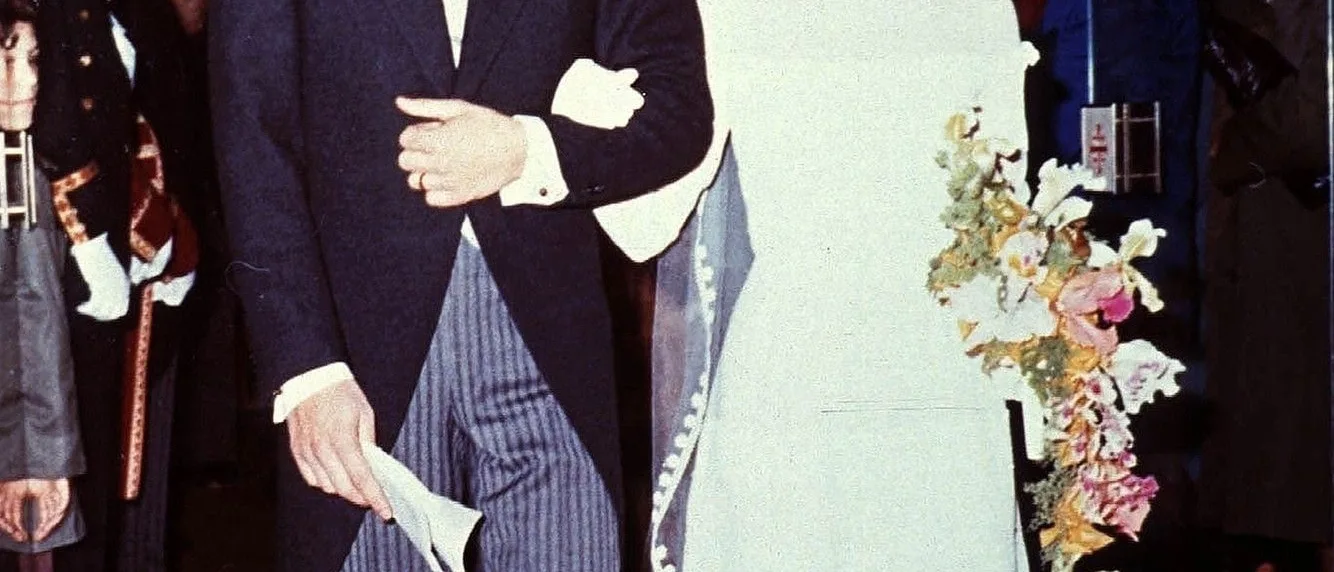
Maurizio had met Patrizia Reggiani in Milan in the late 1960s. She was beautiful, sharp, and determined. His father Rodolfo disapproved of the match from the start — convinced she was after the family name — but Maurizio married her anyway in 1973. They had two daughters. For years, she was Lady Gucci in every room she entered.
In 1990, Maurizio left her for another woman, Paola Franchi. The divorce was finalized in 1994. Under the settlement, Patrizia received alimony of $1.47 million per year. It was, by any rational measure, a substantial sum.
Maurizio then announced he planned to remarry Paola Franchi. Under Italian law, remarriage would have triggered a reduction in Patrizia's alimony — cutting her annual payments from $1.47 million to approximately $860,000.
Patrizia described this as "a bowl of lentils."
The psychic, the pizzeria owner, and the plan
Patrizia had a close friend — Giuseppina "Pina" Auriemma, a psychic who served as something between a confidante and a fixer in her social world. Patrizia went to Pina with a problem. Pina found a solution.
The solution was Benedetto Ceraulo.
Ceraulo was a man in financial trouble — the owner of a failing pizzeria, debt-ridden and looking for a way out. He was hired to kill Maurizio Gucci. The amount paid for the contract has been reported at approximately 600 million Italian lire — worth roughly $370,000 at the time.
On the morning of March 27, 1995, Ceraulo waited outside Maurizio's Milan office. He carried a .357 Magnum. When Maurizio arrived, Ceraulo shot him four times. The door attendant, wounded in the attack, survived.
The investigation that followed initially focused elsewhere. Detectives examined Gucci family rivals. They looked at casino connections. They considered business enemies. It took two years before the investigation turned toward Patrizia.
Trial of the century, Italian edition
Patrizia was arrested in 1997. The trial was a tabloid spectacle from the first day. The Italian press dubbed her the "Black Widow." Prosecutors laid out a meticulous reconstruction of the conspiracy: the motive (the impending remarriage and the alimony reduction), the means (Pina Auriemma as intermediary), and the hitman (Ceraulo, who had by then confessed).
Patrizia was convicted of ordering the murder of Maurizio Gucci and sentenced to 29 years in prison. Benedetto Ceraulo, the shooter, received a life sentence. Pina Auriemma was sentenced to 25 years as the intermediary who arranged the contract.
Throughout the proceedings, Patrizia maintained a theatrical composure. She arrived at court in fur. She gave quotable statements to reporters. She seemed, at various points, more interested in the performance of the trial than its outcome.
She served 18 years. In October 2016, she was released on good behavior.
After prison, she kept the money
Patrizia Reggiani was released and returned to Milan. She declined an offer to work at a Gucci store — reportedly commenting that she had never worked a day in her life and did not intend to start. She continues to receive $1.2 million annually from Maurizio's estate.
Gucci the brand, which the family lost entirely in 1993, is now owned by Kering and valued at over $20 billion. The double G. The horse-bit loafer. The bamboo handle. None of it belongs to a Gucci.
In 2021, Ridley Scott adapted the story for the screen. House of Gucci starred Lady Gaga as Patrizia and Adam Driver as Maurizio. It was nominated for awards. It made Patrizia Reggiani a cultural figure all over again.
She said the film made her look bad.
What actually killed the House of Gucci
The easy version of this story is a crime story: a jealous ex-wife, a hitman, a conviction, a prison sentence. But the murder of Maurizio Gucci was the final symptom of a family that had been consuming itself for decades.
Guccio's sons feuded. Aldo's son handed his father to federal prosecutors. Maurizio fled the country, sold the company, and then was shot on his own office steps by a man hired by the woman he had once married. A dynasty that had survived war, postwar Italy, international expansion, and the rise and fall of fashion empires could not survive its own members.
The brand outlived them all. The family did not.
That is perhaps the most fitting epitaph for the House of Gucci: they built something the world still wants. They just couldn't stand each other long enough to keep it.
Related Stories
The princess, the secret children, and the $2 billion Wahaha battle
When China's most famous beverage billionaire died, his daughter thought the empire was hers. Then three strangers showed up with HSBC account numbers and a $2.1 billion claim.
The Safra Banking War: Son vs. Mother, Brothers, and a $25 Billion Empire
When Alberto Safra walked out of his family's bank to build a rival, his father was heartbroken — and his family was mobilizing. What followed was a multinational legal war over billions, a dying patriarch's disputed will, and a group chat nobody was allowed into.
The Redstone Wars: How Shari Outlasted Her Father and Sold the Empire He Built
Sumner Redstone spent decades trying to keep his daughter away from his media empire. She got it anyway — and then sold every last piece of it for $8 billion. Along the way: a son bought out for $250 million, a companion evicted from a mansion, a CBS CEO fired in disgrace, and Donald Trump walking off with $16 million on his way to the White House.