
The Man With Three Secret Wives Who Almost Broke the Silver Market
The richest man in America had a secret
On March 27, 1980, the global silver market came apart in a single day. The price of silver — which had climbed to nearly $50 an ounce just weeks earlier — collapsed 80% as commodity exchanges changed their margin rules overnight and obliterated the positions of two brothers who had quietly accumulated more of the metal than any private actors in history. That day became known as Silver Thursday. The brothers were Nelson Bunker Hunt and William Herbert Hunt. Their father was H.L. Hunt — reportedly the wealthiest man in America — who had been running three separate families, including two secret bigamous marriages, for the better part of his adult life. The $5 billion their sons would lose that day was only one of many catastrophic chapters in a dynasty that seemed to manufacture disaster as efficiently as it once pumped oil.
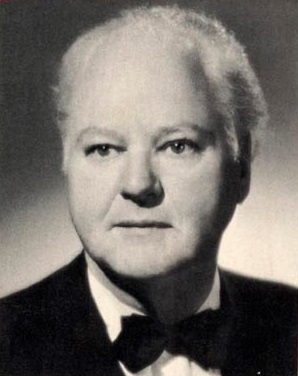
From a poker game to the richest man in the country
Haroldson Lafayette Hunt Jr. — H.L. to everyone — secured rights to much of the East Texas Oil Field in the early 1930s. Legend says he won the rights in a single poker game. The reality was more complicated, but the legend suited him, and he never seemed to mind it. What followed was one of the great American fortune-building stories: Hunt Oil became a colossus, and at his peak, H.L. was estimated to be the wealthiest man in the United States.
He was also, quietly, living a double life. Then a triple one.
H.L. married Lyda Bunker Hunt first, and they had six children. While still married to Lyda, he married Frania Tye Lee — a second, bigamous marriage — and had four more children with her. When that relationship ended, he married Ruth Ray, his third wife, also while still technically married, and had four more children. Fifteen children in total. Three households. One man running them all, apparently without any of the families fully grasping the scale of what was happening. When H.L. Hunt died in 1974, the seeds of generational chaos had already been planted across the dynasty he left behind.
The inheritance structure no one was supposed to find out about
The children of Frania Tye Lee received what the family called "Reliance Trusts" — private arrangements that allocated them roughly one-sixteenth of the total estate. That fraction was not an accident. It was acknowledgment without equality: a legal recognition that these children existed and had some claim, but that they would not be treated as peers to Lyda's branch of the family. The children of his main dynasty received the rest. The architecture of H.L.'s secret life was encoded directly into who got what when he died.
The heist that nearly worked
Nelson Bunker Hunt and William Herbert Hunt — two of H.L.'s sons by Lyda — did not inherit their father's gift for discretion. What they inherited was his appetite for scale.
In the late 1970s, the brothers began quietly accumulating silver. Not a hedge fund position. Not a speculative stake. A systematic, years-long campaign to corner the entire global market. By early 1980, they had amassed 200 million ounces of silver — more than half the world's above-ground deliverable supply. At the peak, in January 1980, their position was worth nearly $10 billion.
It was the most audacious commodity play in American financial history. And for a while, it worked. Silver prices soared. The brothers' paper profits climbed. The thing about cornering a market, though, is that the market has referees — and the referees noticed.
Silver Thursday
March 27, 1980. The commodity exchanges changed their margin rules. Overnight, the brothers were required to put up substantially more capital to hold their positions. They couldn't. The silver price collapsed 80% in a single trading day.
Five billion dollars in losses. Gone.
The brothers scrambled to cover initial margin calls by mortgaging Hunt family oil properties. Then the 1980s energy bust arrived and hammered those values too. By 1988, Nelson Bunker Hunt and William Herbert Hunt filed personal bankruptcy. A federal court subsequently ruled that they had illegally conspired to corner the silver market and ordered them to pay $130 million in restitution.
The bankruptcy didn't stay contained to the brothers. Nearly 100 defendants — mostly family members — were swept into the resulting Hunt family lawsuits as trustees pursued claims across the dynasty. Legal bills alone exceeded $20 million. The family that H.L. Hunt had built — and subdivided and kept secret and left to his children like a ticking clock — was now tearing itself apart in federal court.
The brother who stayed out of the silver market
While Nelson and Herbert were engineering their collapse, their brother Lamar Hunt was doing something different with the family name. In 1959, Lamar founded the American Football League — the upstart rival league that eventually forced a merger with the NFL. He became the longtime owner of the Kansas City Chiefs. He coined the term "Super Bowl." He was, in nearly every professional sense, the Hunt who got it right.
The chaos his brothers created did not spare Lamar's branch of the family from the broader fallout, but his personal legacy remained separate from the wreckage of Silver Thursday.

The next generation sues
The Hunt family's legal wars did not end with the bankruptcy. In 2007, Albert G. Hill III — great-grandson of H.L. Hunt — filed suit against family trustees including his own father, Albert G. Hill Jr., and his aunt Margaret Hunt Hill. The allegation: breaches of fiduciary duty in the management of dynasty trusts tied to Hunt Petroleum Corp.
The timing mattered. Hunt Petroleum was acquired by XTO Energy in 2008 for $3.7 billion. Al III claimed he had been cut out of the proceeds from a sale that should have benefited him. The dispute settled in 2010, adding one more chapter to a legal saga that had been running for three decades.
What $24.8 billion in wreckage looks like
The current combined Hunt family net worth sits at approximately $24.8 billion, according to Forbes. For a dynasty that once had the wealthiest man in America at its head, that number is both enormous and, given what it once was, a kind of monument to how much can be lost.
H.L. Hunt died in 1974, before Silver Thursday, before the bankruptcies, before the next-generation lawsuits. He left behind an oil empire, three secret families, fifteen children, and an inheritance structure that guaranteed conflict. His sons tried to corner the silver market and lost $5 billion. His great-grandson sued his own father. His secret children were allocated one-sixteenth of an estate they had as much right to as anyone.
The Hunts are not a cautionary tale about greed, exactly. Plenty of wealthy families stay intact. They are a case study in what happens when a patriarch decides that scale — of wealth, of family, of ambition — is its own answer to every question. H.L. Hunt kept stacking. More oil. More money. More families. More children. More secrets. His sons kept stacking too: more silver, more leverage, more risk, until the day the market decided it had seen enough.
Silver Thursday lasted one day. The fallout lasted three decades. Some of it is still running.
Related Stories

The princess, the secret children, and the $2 billion Wahaha battle
When China's most famous beverage billionaire died, his daughter thought the empire was hers. Then three strangers showed up with HSBC account numbers and a $2.1 billion claim.

The Safra Banking War: Son vs. Mother, Brothers, and a $25 Billion Empire
When Alberto Safra walked out of his family's bank to build a rival, his father was heartbroken — and his family was mobilizing. What followed was a multinational legal war over billions, a dying patriarch's disputed will, and a group chat nobody was allowed into.
The Redstone Wars: How Shari Outlasted Her Father and Sold the Empire He Built
Sumner Redstone spent decades trying to keep his daughter away from his media empire. She got it anyway — and then sold every last piece of it for $8 billion. Along the way: a son bought out for $250 million, a companion evicted from a mansion, a CBS CEO fired in disgrace, and Donald Trump walking off with $16 million on his way to the White House.