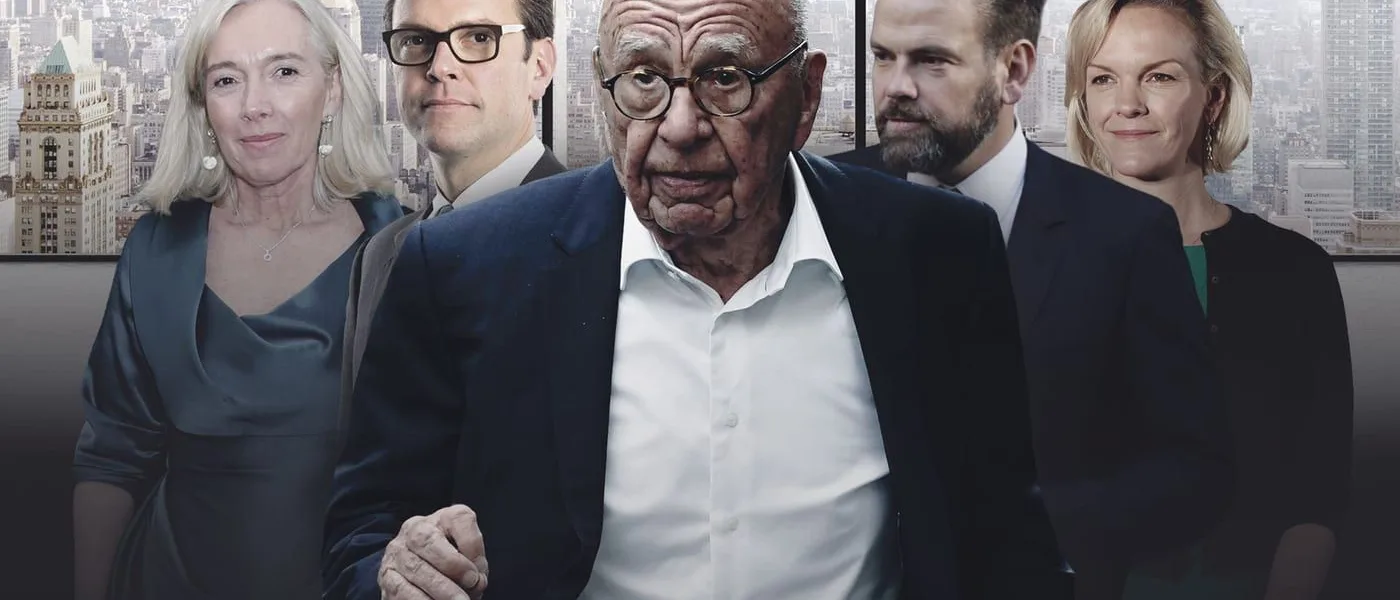
An epic battle over Rupert Murdoch's $6 Billion
Picture this: a 93-year-old man who built one of the most powerful media empires on the planet walks into a probate court in Reno, Nevada. Not to gamble — though some might argue he already is. Rupert Murdoch, the titan behind Fox News, The Wall Street Journal, The New York Post, and The Times of London, showed up because his own children dragged the family fortune into the legal arena. The thing he tried to rewrite? An “irrevocable trust.” The thing that blew up in his face? Everything else.
Murdoch’s scheme carried the almost satirically optimistic codename “Project Harmony.” The goal was straightforward enough: consolidate voting control of his media empire in the hands of eldest son Lachlan, the sibling who most closely mirrors Rupert’s conservative worldview. Under the existing trust structure, voting power splits evenly among the four children from Murdoch’s first two marriages. Rupert wanted to rewrite that math. Lachlan gets the throne. The other three get sidelined. You can guess how well that landed. The siblings are now locked in open warfare, and “harmony” has become the most ironic word in the Murdoch vocabulary.
What makes this more than just a delicious spectacle of billionaire dysfunction is the deeper question lurking underneath: can anyone — no matter how rich, how ruthless, how lawyered up — actually control what happens to their fortune after they die? The honest answer is almost certainly not.
When money meets feelings
“Most clients say they want to save on estate taxes, but the truth is, their real priorities are usually things like keeping their kids productive, protecting assets from future ex-spouses, or deciding who runs the family business,” says Tasha K. Dickinson, an expert in high-net-worth estate planning. That gap between what the ultra-wealthy say they want and what actually keeps them up at night sits at the heart of nearly every inheritance blowup. Because children — even adult children with trust funds the size of small nations — cannot help but read a will as a final report card. Who got more? Who got less? Who did Dad really love?
Inheritance wars are as old as wealth itself, and attorney P. Mark Accettura literally wrote the book on them. In Blood and Money: Why Families Fight Over Inheritance, he traces the impulse back to evolutionary psychology. “People are wired to behave in certain ways,” he says. Layer on the learned behaviors that come with growing up in hyper-competitive, high-achieving dynasties, and you get a volatile cocktail. Accettura points to dysfunctional families marked by Cluster B personality disorders — narcissism, histrionics, and worse — as the ones most likely to turn estate disputes into full-blown public spectacles.
Exhibit A: Sumner Redstone, the late Viacom tycoon. With an estimated $2.6 billion fortune and a personality that could fill a stadium, Redstone spent his final years in open combat with girlfriends, children, and corporate executives alike. He fired off company-wide emails calling his daughter Shari vulgar four-letter names. And yet, after all the chaos, Shari emerged victorious, becoming chairwoman of the rebranded Paramount Global. The dynasty survived. The dignity, less so.
Billionaires trying to beat death
Some of the world’s wealthiest people pour money into plasma transfusions and experimental anti-aging technology, racing against biology with the same intensity they once brought to hostile takeovers. Murdoch’s approach is more old-school: he reaches for lawyers and paperwork. “Ruling from the grave is hard, but it’s possible to build a long-term estate plan,” says Dickinson. The catch is that it requires realistic expectations and advisors brave enough to tell a billionaire that his grand vision has holes in it. That second part, as you might imagine, does not come naturally to the people on Rupert Murdoch’s payroll.
Even meticulously crafted plans can unravel. Private trusts, unlike their charitable cousins, remain vulnerable to legal challenges and amendments. Charitable trusts tend to hold firm — the Isabella Stewart Gardner Museum in Boston still operates under the strict terms its founder laid down in 1903. (The only breach came courtesy of the infamous 1990 art heist, not a courtroom.) Private family trusts enjoy no such permanence.
Drama worth billions
If the Murdoch saga sounds extreme, consider the competition. Nina Wang, once Asia’s richest woman, left behind a $4.2 billion estate that descended into a circus of forgery allegations, prison sentences, and the still-unresolved kidnapping of her husband. Leona Helmsley, the notorious “Queen of Mean,” famously bequeathed millions to her dog, Trouble, while cutting two of her grandchildren out entirely. And then there is L’Oreal heiress Liliane Bettencourt, whose $45 billion fortune ignited a sprawling family war that metastasized into a full-blown political scandal in France.
The lesson from all of these cases is blunt: there is no such thing as an ironclad trust. Attorney Adam Streisand — yes, that is his real name — has handled the estates of Michael Jackson and Marilyn Monroe, so he knows the terrain. In one high-profile matter, he represented Damian Hurley, son of Elizabeth Hurley, in a fight over a trust worth hundreds of millions. Streisand won at trial. Then the decision got reversed on appeal, and Damian walked away with nothing. Courts giveth, and courts taketh away.
The Murdoch legacy showdown
The year 2024 handed Rupert Murdoch a milestone birthday, a fifth marriage, and a courtroom confrontation with three of his six children. The prize at the center of the fight: voting control of the $6 billion family trust, the mechanism that determines who actually steers the media empire. Rupert wants Lachlan at the helm, convinced that his eldest son is the only one who will preserve the conservative editorial direction that made the Murdoch brand a political force. The other siblings disagree. Loudly.
Back in 2007, a then-79-year-old Murdoch told reporters, “I just want to live forever. I enjoy myself too much.” Nearly two decades later, he is learning what Percy Shelley tried to tell us all in Ozymandias: every empire, no matter how vast, eventually meets the desert. The court filings will keep piling up. The family dinners will stay awkward. And the billions will keep the whole machine grinding forward, because if there is one universal truth about dynastic wealth, it is this — the money outlasts the love, and the lawyers outlast them both.
Related Stories
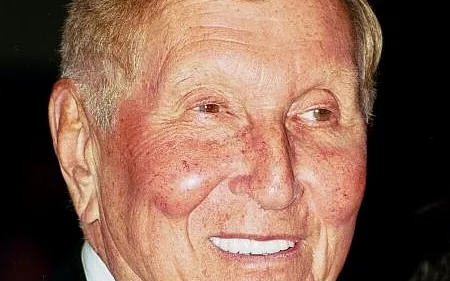
The Redstone Wars: How Shari Outlasted Her Father and Sold the Empire He Built
Sumner Redstone spent decades trying to keep his daughter away from his media empire. She got it anyway — and then sold every last piece of it for $8 billion. Along the way: a son bought out for $250 million, a companion evicted from a mansion, a CBS CEO fired in disgrace, and Donald Trump walking off with $16 million on his way to the White House.
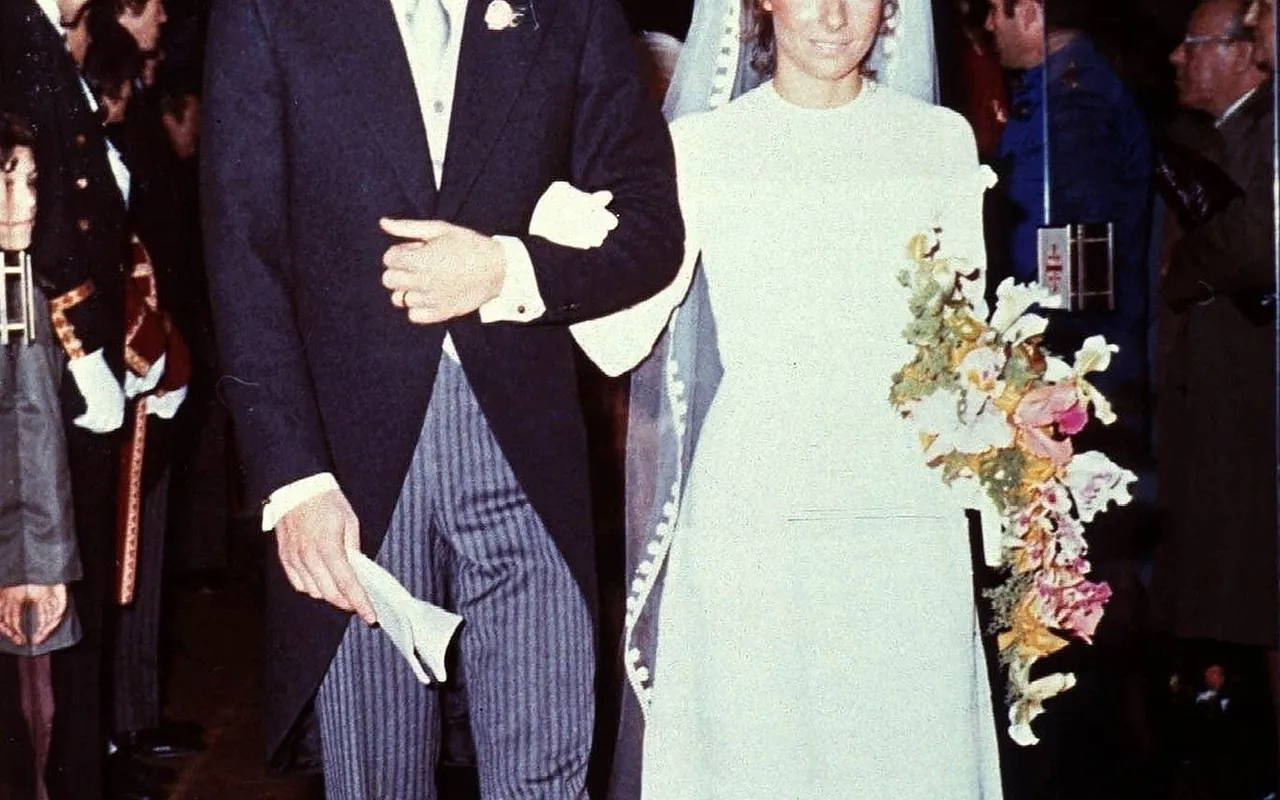
The House of Gucci ran on blood before anyone pulled a trigger
The family that built one of the world's most recognizable luxury brands spent decades tearing each other apart — in courtrooms, boardrooms, and finally, on a Milan street. The murder of Maurizio Gucci in 1995 was the final act of a dynasty that had been killing itself for years.

The Woman Who Tried to Save Her Mother from a Billion-Dollar Con
Liliane Bettencourt was the world's richest woman — and she was being drained of a billion dollars by her best friend. Her daughter went to war to stop it, and blew up French politics in the process.